

Why Is My Espresso Sour? A Troubleshooting Guide for Under-Extraction
A shot that finishes in 18 seconds and tastes like a lemon wedge isn’t a bad batch of beans. It’s usually a measurable, fixable problem called under-extraction, and most home baristas can correct it in two or three adjustments without buying anything new.
This guide to why your espresso is sour walks through the most common causes of under-extraction, in order of likelihood, and gives you simple checks you can run with the equipment already on your counter.
Key Takeaways
- Sour espresso almost always means under-extraction: not enough coffee compounds dissolved into the water before the shot stopped.
- Grind size is the most common fix. Too coarse a grind lets water rush through too fast.
- Shot time is a clue, not a rule. A slow shot can still taste sour if the puck channels or the machine is cold.
- Change one variable at a time: grind first, then dose and yield, then temperature.
- Some brightness is intentional in light-roasted coffee. Sourness without sweetness is the actual fault to fix.
What Under-Extraction Actually Means
Espresso extraction is the process of dissolving flavor compounds out of ground coffee using hot, pressurized water. Different compounds dissolve at different speeds. Acids and other highly soluble substances come out first. Sweetness, body, and the compounds that create bitterness generally need more contact time and more water passing through the grounds.
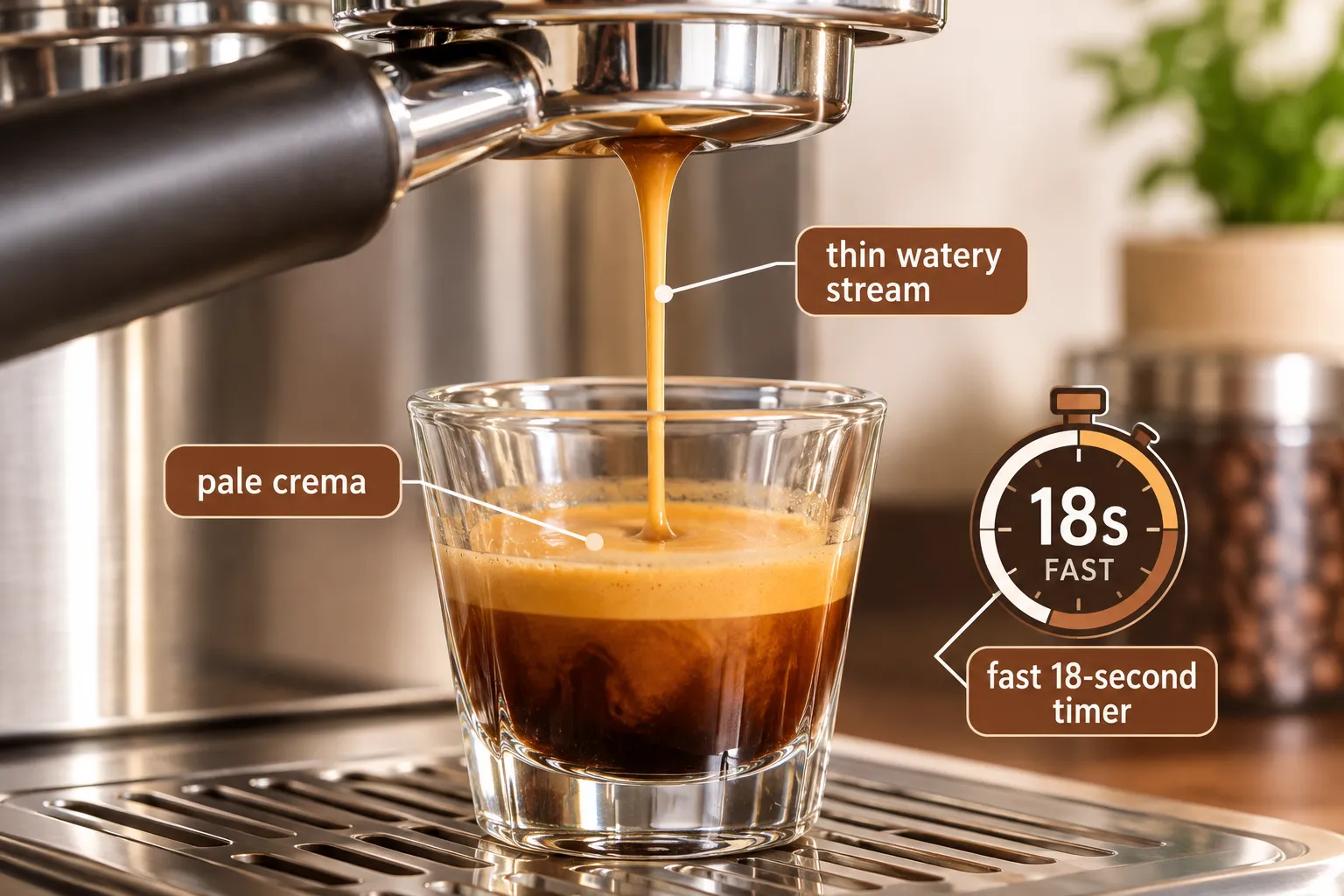
When a shot stops too early, you’ve pulled mostly the easy, sour-leaning compounds and little of the sweetness that normally balances them out. That’s under-extraction, and it’s the direct answer to why your espresso is sour.
The specialty coffee world has long used a reference range of roughly 18 to 22 percent extraction yield for filter coffee as a rough benchmark for balance, measured using total dissolved solids (TDS) in the brewed liquid. Espresso is far more concentrated than filter coffee, but the underlying idea still applies: pull too little out of the grounds, and acidity dominates the cup.
Pull quote: Sourness without sweetness is the fault. Brightness with sweetness is a flavor choice, not a mistake.
Sour or Just Bright? Know the Difference First
Not every citrusy note is a problem. A clean, sweet, fruit-forward shot from a light-roasted Ethiopian, Kenyan, or Colombian coffee is a style choice, not a flaw. The sourness worth troubleshooting is sharp, thin, and puckering, with little sweetness and a short, flat finish.
If you’re not sure which one you’re tasting, that uncertainty itself is useful information. It means the shot probably needs a small adjustment rather than a complete overhaul. For a broader walkthrough of sour flavor causes and fixes, see our companion piece on causes, fixes, and what to change first for sour espresso.
Why Is My Espresso Sour? A Troubleshooting Guide for Under-Extraction, Start With Grind Size
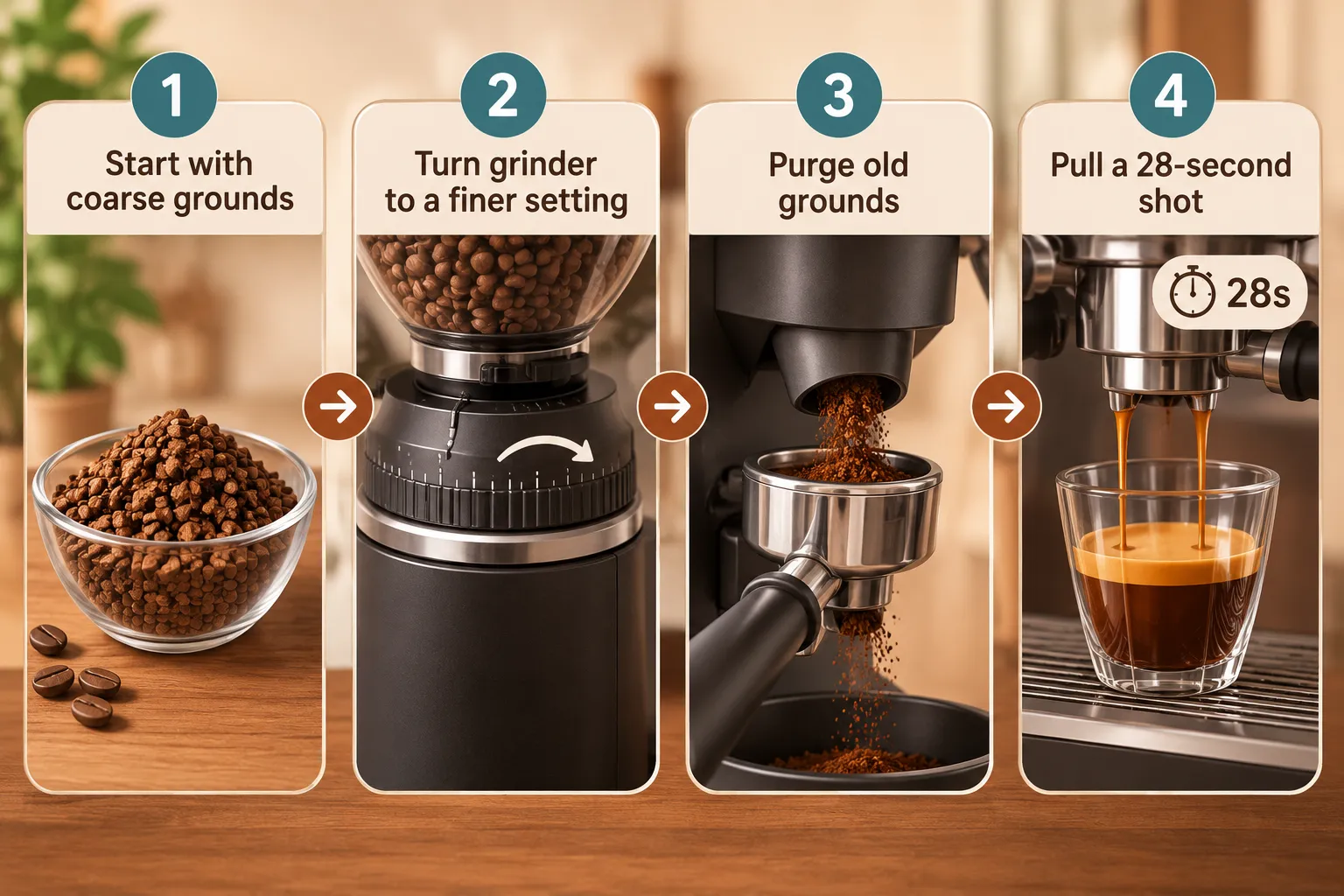
Grind size is the single most common reason espresso tastes sour, and it’s the first thing to check. Coarse grounds create larger gaps for water to travel through. Water moves fast, contact time drops, and the shot finishes under-extracted even if your dose and timer look normal.
Quick check:
- Grind noticeably finer, a small step rather than a dramatic jump.
- Purge a pinch of retained grounds from the grinder’s chute before weighing your dose, since old grounds mixed with new can skew the results.
- Keep the same dose and the same target yield, and pull another shot.
- Taste and check the time. A shot finishing under about 20 seconds is commonly too fast and too sour.
If you need a refresher on the full process, our step-by-step guide to dialing in espresso for beginners covers grind, dose, and ratio together in more detail.
One caution from peer-reviewed research is worth knowing: grinding finer isn’t a fix with no limit. A 2020 study published in the journal Matter on systematically improving espresso extraction found that very fine grind settings can actually reduce extraction yield, because flow becomes uneven and channels form through the puck instead of water passing evenly through it. If you go finer and the shot gets both sour and bitter at the same time, or starts choking and stalling, stop adjusting grind and look at puck preparation instead.
Dose, Ratio, and Shot Time Aren’t Independent
Shot time is a useful diagnostic, but it’s not a guarantee of quality on its own. A shot that runs 25 to 30 seconds can still taste sour if the puck is channeling, the machine hasn’t fully warmed up, or the coffee is roasted especially light. Conversely, a slightly faster shot can taste fine if the grind and dose are well matched.
Two settings tend to get overlooked:
- Dose too low: Less coffee means less resistance, so water moves through faster and extracts less.
- Yield too short: Stopping the shot early cuts off the later, sweeter stage of extraction before it has a chance to develop.
A practical sequence recommended by several current brewing guides is to adjust grind first, then extend the yield (pull more liquid out for the same dose), and only afterward consider raising temperature. Changing several variables simultaneously makes it hard to know what actually fixed, or broke, the shot. This single-variable approach is also the backbone of good espresso troubleshooting generally, not just for sourness.
Puck Preparation and Channeling
Channeling happens when water finds a weak spot in the coffee puck, usually from uneven distribution or tamping, and rushes through that path instead of flowing evenly across the whole bed of grounds. The result looks like a normal-length shot but tastes under-extracted and sour, because large sections of the puck barely got touched by water.
Common causes of channeling include:
- Uneven distribution before tamping
- A tamp that isn’t level
- Clumpy grounds from a grinder that needs cleaning
- A worn or mismatched shower screen that distributes water unevenly
If your shot time looks normal but the taste still leans sour, puck prep is a more likely culprit than grind size. A quick WDT (weiss distribution technique) pass with a thin tool before tamping is a low-cost way to rule this out.
Machine Temperature and Warm-Up
Temperature plays a smaller role than many beginners assume, once grind and dose are under control. A 2020 study led by researchers at UC Davis found little sensory difference in drip coffee brewed between 87°C and 93°C when strength and extraction were held constant. That suggests temperature isn’t usually the first lever to pull.
That said, a genuinely cold machine or portafilter can still contribute to sourness in practice, especially on single-boiler machines that haven’t fully stabilized. If your machine has only been on for a few minutes, or you haven’t run a blank shot to warm the group head and portafilter, give it more time before troubleshooting grind and dose further. Routine upkeep also matters here: mineral buildup from hard water can affect heating consistency over time, which is one more reason regular descaling belongs in your maintenance routine.
Bean Freshness and Roast Level
Very light roasts naturally extract differently than medium or dark roasts, and they can taste sour at settings that work fine for a darker bean. If you recently switched beans and sourness appeared at the same time, the bean itself, not your technique, may be the main variable that changed.
Degassing also matters. Coffee releases carbon dioxide for one to two weeks after roasting, and very fresh beans can resist even water flow, producing uneven extraction and sourness regardless of grind setting. If your bag was roasted within the last few days, let it rest before troubleshooting further.
A Simple Troubleshooting Order
- Check grind size first. Go slightly finer and purge the grinder.
- Confirm dose and yield. Weigh both, don't eyeball.
- Inspect the puck for channeling, uneven tamp, or clumping.
- Give the machine time to reach stable temperature.
- Consider bean age and roast level if the first four checks don't resolve it.
This order reflects current consumer troubleshooting guidance from equipment makers and roasters alike: start with flavor and flow clues, then change one variable at a time rather than adjusting grind, dose, temperature, and yield all at once. That discipline is what actually makes dialing in a repeatable skill instead of guesswork.
When the Machine or Grinder Might Be the Real Issue
Most sour shots trace back to technique, not equipment. But a few mechanical issues are worth ruling out if adjustments aren’t helping:
- Grinder burrs worn or misaligned, producing inconsistent particle size regardless of the dial setting
- Pump or boiler inconsistency on an aging machine, affecting pressure or temperature stability
- Mismatched machine and grinder, where a stepped grinder can’t produce the fine, consistent grind espresso needs
Good machine and grinder pairing matters here. A capable machine paired with a grinder that can’t produce a narrow, consistent particle size will always be harder to dial in, no matter how carefully you adjust dose and yield. If you’re shopping for either piece, our buying guides cover how to choose the right espresso machine and choose the right grinder for a practical home espresso setup without overspending.
Who This Troubleshooting Approach Is For
This guide is written for home baristas using semi-automatic machines, the kind found across the Breville Bambino and Barista lines, Gaggia Classic, Rancilio Silvia, and similar Lelit or Profitec models. If you’re using a superautomatic machine with built-in grind and brew settings, some of these adjustments, especially puck prep, won’t apply the same way.
Who should skip chasing an upgrade: if you haven’t yet worked through grind, dose, yield, and puck prep systematically, a new grinder or machine is unlikely to solve sourness on its own. Equipment can make consistency easier to achieve, but it rarely replaces technique. For perspective on when an upgrade is actually worth it versus when it’s an unnecessary expense, our breakdown of the real cost of owning a home espresso machine is a useful next read.
FAQ
Is sour espresso always under-extracted? Not always, but it’s the most common cause by far. Very light roasts and very fresh beans can also produce sourness even at reasonable extraction levels.
How fast should a normal shot run? There’s no single correct number, but many home setups aim for roughly 25 to 30 seconds for a double shot. A shot under 20 seconds is commonly too fast and under-extracted.
Should I change grind, dose, or yield first? Grind first, in small steps, keeping dose and yield steady. Once grind is close, fine-tune yield, and treat temperature as a later adjustment rather than a first move.
Can water quality cause sour espresso? Water chemistry affects extraction efficiency, and mineral buildup from hard water can interfere with consistent heating over time. It’s a secondary factor compared to grind and puck prep, but it matters for long-term espresso machine maintenance.
Why does my shot look normal but still taste sour? This usually points to channeling rather than grind size. Water found an easy path through the puck instead of flowing evenly, so parts of the grounds were barely extracted.
Is finer grinding always better for sourness? No. Past a certain point, very fine grinding can create more channeling and uneven flow, which can lower extraction yield instead of raising it. If finer grinding makes the shot both sour and bitter, focus on puck preparation instead.
Conclusion
Sour espresso is frustrating, but it’s one of the more fixable problems in common espresso problems because the cause almost always sits in a short list: grind size, dose and yield, puck preparation, machine temperature, or bean freshness. Work through that list one variable at a time, and resist the urge to adjust everything at once.
Better espresso at home doesn’t require perfectionism or expensive upgrades. It requires a repeatable process: taste, adjust one thing, taste again. Start with grind, confirm your numbers, check for channeling, and give your machine time to warm up. Most readers will find the fix within those first few steps, making the whole setup easier to live with and far more predictable day to day.
For more on building a reliable routine, visit our dialing in and technique section, or browse Espresso Savvy’s home page for broader guidance on practical home espresso ownership.
Meta Title: Why Is My Espresso Sour? Under-Extraction Troubleshooting Guide
Meta Description: Sour espresso usually means under-extraction. Learn the real causes, from grind size to channeling, and how to fix it step by step at home.
Tags: espresso troubleshooting, sour espresso, under-extraction, dial in espresso, home espresso setup, grind size, espresso machine maintenance, puck preparation, extraction yield, home barista, espresso technique, channeling
Contributing writer at Espresso Savvy.
